
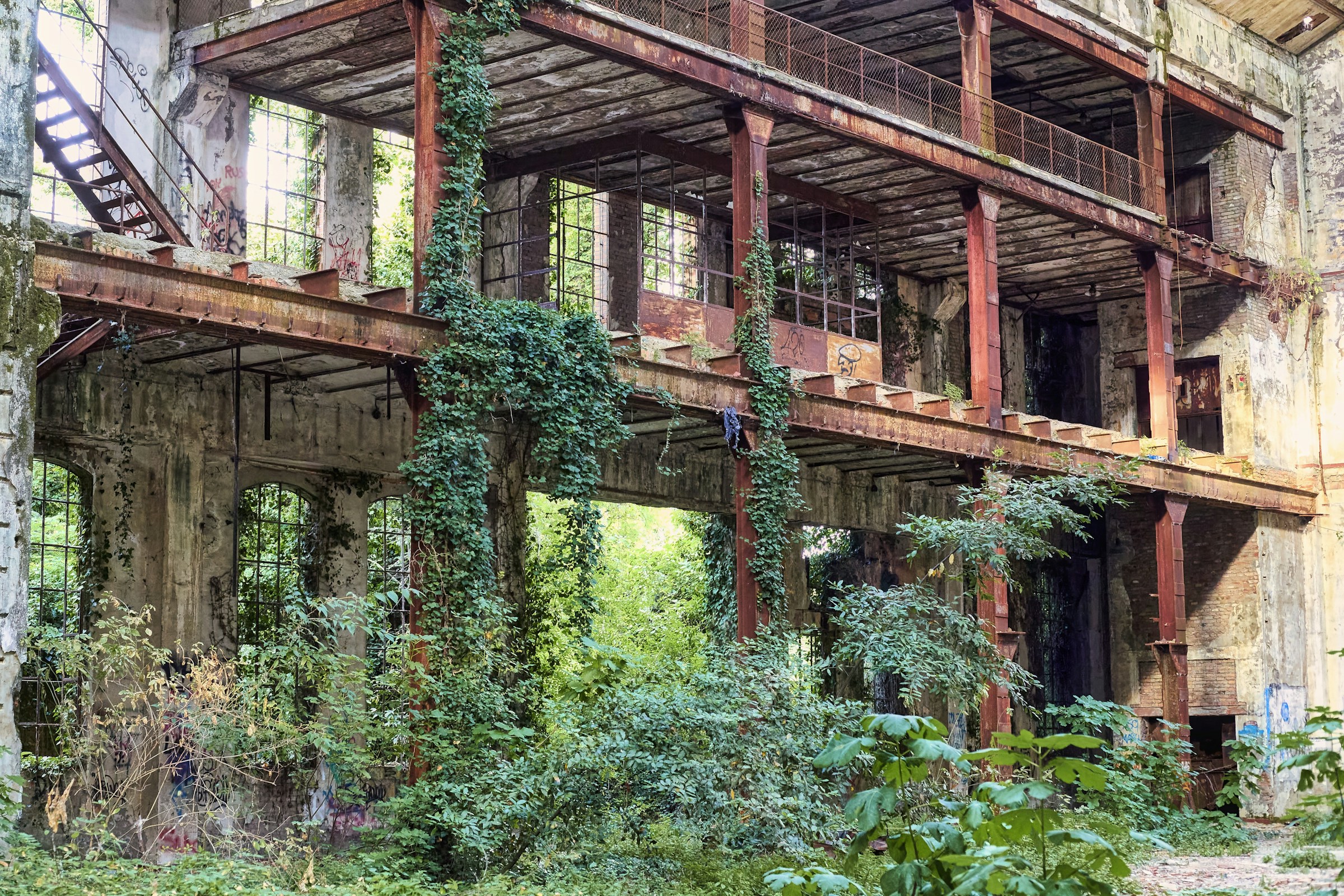
Actions leave evidence that another person can discover.
Wear, repair, growth, displacement, and damage become legible records rather than temporary effects.
Exploring whether a digital place can carry visible history instead of returning to the same untouched state.
The central research question
Research scope
Many online worlds are persistent because their servers remain available, but their places are not fully persistent. Instancing, resets, respawning objects, and reversible destruction protect gameplay consistency by removing much of the world’s physical history.
Inviox will study environmental memory: deterministic rules through which paths wear down, vegetation changes, repairs remain visible, objects migrate, and collective actions leave readable traces. The question is whether these traces create attachment and stewardship, or merely produce clutter, unfairness, and a world newcomers cannot understand.
Why this question
The research separates persistence from uncontrolled accumulation.
Wear, repair, growth, displacement, and damage become legible records rather than temporary effects.
Different systems operate at different rates and can pause, recover, or reach equilibrium instead of changing forever.
When actions cannot be instantly reset, players may protect, contest, repair, or deliberately mark a shared place.
Initial Inviox study
Stable participant groups will revisit two matched environments across eight sessions. One world resets after each session; the other retains deterministic traces of movement, use, repair, damage, object placement, and ecological change.
Define which actions create traces, how visible they become, how long they remain, and which changes must always be reversible.
Use the same layout, tasks, assets, weather, and performance target; only environmental memory differs between conditions.
Confirm that traces can be understood, do not destroy navigation, and remain technically stable across saved world states.
Stable groups revisit the environments while movement, modifications, repairs, conflicts, and voluntary return behaviour are recorded.
New participants enter later and explain what they believe happened, testing whether accumulated history is understandable without explanation.
Publish versioned world states, measured effects, unwanted behaviours, rollback decisions, and the limits of permanent change.
What will be measured
World and community protections
Research value
This page does not claim a result. It defines the evidence and public outputs the study is expected to produce.
A versioned environment in which physical history can be observed, compared, and safely reversed.
Documented rules for wear, growth, damage, repair, recovery, and readable historical traces.
Evidence on attachment, return behaviour, stewardship, confusion, conflict, and technical cost over time.
Recommendations for deciding which changes should persist, who may reverse them, and how newcomers remain included.
Evidence base
Current research shows that people can form attachment to virtual places and that many online worlds limit true persistence. Inviox will test the effect of environmental memory directly.
INVIOX / RESEARCH
Researchers, world builders, community designers, and preservation specialists can contribute rules, risks, and review criteria.