
Generating more is easy to demonstrate.
The study asks whether a system can produce useful variation at scale without obvious repetition, broken composition, or unmanageable graphs.
Studying whether intelligent and rule-based production tools can expand a world without erasing the decisions that make it authored.
The central research question
Research scope
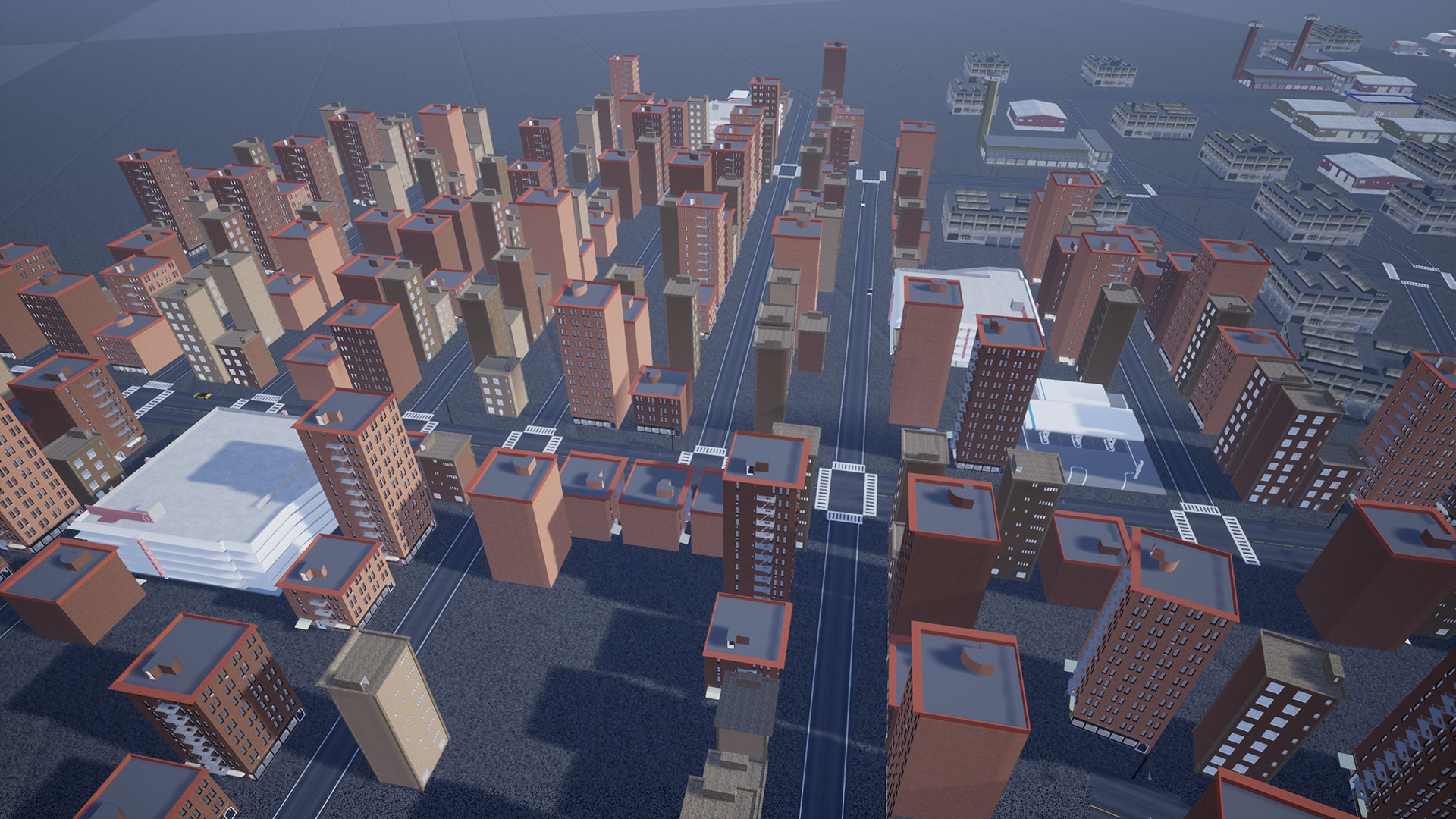
Procedural generation is already capable of placing vegetation, buildings, roads, and entire biomes. New language-driven interfaces can also help people construct and modify procedural graphs. The unresolved question is not whether these systems can generate more content. It is whether the complete production process becomes better after correction, review, optimization, and artistic revision are counted.
Inviox will study directed generation: systems constrained by a human-authored brief, asset library, spatial grammar, performance budget, and approval process. The research will compare the total cost and quality of a procedural workflow with a conventional hand-authored workflow under the same conditions.
Why this question
A useful system must survive the parts of development that demonstrations usually leave out.
The study asks whether a system can produce useful variation at scale without obvious repetition, broken composition, or unmanageable graphs.
Every generated decision should remain inspectable, editable, reproducible, and attributable to a rule, input, or approved tool.
Setup, failed generations, manual correction, technical review, optimization, and later art-direction changes will all be included in the production cost.
Initial Inviox study
Two equivalent real-time districts will be produced from the same brief and asset library: one through a conventional hand-authored workflow and one through a directed procedural workflow. A crossover design will reduce the effect of individual artist speed.
Preregister the research question, success criteria, failure conditions, and the evidence required before building begins.
Use the same 150 × 150 metre district, asset kit, reference board, hardware, visual target, and frame-time budget for both workflows.
Create deterministic rules for roads, building types, density, sightlines, prop placement, variation, exclusions, and artist overrides.
The same practitioners complete both workflows in a balanced order while time, revisions, failures, and interventions are logged.
Independent art and technical reviewers score composition, coherence, repetition, editability, and runtime quality without knowing which workflow produced each result.
Report useful gains, cleanup time, failed approaches, limitations, and the conditions under which procedural assistance should not be used.
What will be measured
Research controls
Research value
This page does not claim a result. It defines the evidence and public outputs the study is expected to produce.
A reproducible Unreal Engine environment and procedural graph demonstrating the tested workflow.
A transparent comparison of time, revision cost, quality, performance, and provenance.
A practical guide explaining where procedural assistance helps, where it creates debt, and where human authorship must remain direct.
A documented brief that students can inspect, challenge, and repeat rather than a promotional technology demonstration.
Evidence base
These sources demonstrate current capabilities. They do not answer Inviox’s production comparison for us.
INVIOX / RESEARCH
Studios and practitioners can propose a workflow, review criterion, or production constraint for the study.